Founding speakersList your profile by October 31 and we will select 25 speakers to upgrade to Verified for a year, a $999 value at no cost.How it works
Every fee below is published by Alexandros. Custom quote means Alexandros prices that session for your event.
The Places That Make Us: Neuroscience, Beauty, and Wellbeing
$1,500
Keynote·1 to 2 hours·In person or virtual
For entrepreneurs and business owners, CEOs and senior executives, executive peer groups, general corporate audiences, and boards and nonprofit leaders.
An illustrated talk explores how buildings, cities, and beauty affect our brains and wellbeing. Through visual comparisons, research findings, and audience discussion, participants examine their responses to places and consider practical implications for design.
Recognise how everyday environments influence attention, emotions, and wellbeing.
Identify how nature, beauty, and organised visual complexity can inform better design.
Ask informed questions when choosing or improving homes, workplaces, and public spaces
Session details and terms
Travel and logistics: Based in Bolzano, Italy, happy to travel. Travel expenses are not included in my fee. Promotion: None proposed. Required purchases: None. Attendee follow-up: Only with attendees who choose to hear from Alexandros. A sign-up sheet for anyone who wants to be informed for new publications or presentations.
Growing Up in Place: How Environments Influence Child Development
$1,500
Keynote·1 to 2 hours·In person or virtual
For entrepreneurs and business owners, spouses and partners, families and children, general corporate audiences, and boards and nonprofit leaders.
An illustrated talk examines how homes, schools, and neighbourhoods influence children’s development. Research, visual examples, and audience discussion explore how environments can support exploration, learning, and wellbeing.
Understand how physical surroundings can support children’s learning, exploration, and wellbeing.
Recognise the value of nature, sensory variety, and opportunities for play.
Ask informed questions when choosing or improving homes, schools, and neighbourhoods for children.
Session details and terms
Travel and logistics: Based in Bolzano, Italy, happy to travel. Travel expenses are not included in my fee. Promotion: None proposed. Required purchases: None. Attendee follow-up: Only with attendees who choose to hear from Alexandros. A sign-up sheet for anyone who wants to be informed for new publications or presentations.
Designing for Human Experience: Neuroscience, Beauty, and AI
Custom quote
Workshop·Full day·In person
For entrepreneurs and business owners, CEOs and senior executives, executive peer groups, general corporate audiences, and boards and nonprofit leaders.
A full-day workshop combining illustrated talks, image-rating exercises, and guided discussion. Explore neuroscience, beauty, and architectural patterns; compare visual responses with attention predictions; and examine AI-assisted design examples.
Understand how nature, beauty, and organised visual complexity relate to perception and wellbeing.
Explore what visual ratings, attention models, and biometric methods can—and cannot—tell us about our responses to places.
Explore how AI can use architectural patterns to generate design ideas, and evaluate them through a neuroscience-informed lens.
Session details and terms
Travel and logistics: Based in Bolzano, Italy, happy to travel. Travel expenses are not included in my fee. Promotion: None proposed. Required purchases: None. Attendee follow-up: Only with attendees who choose to hear from Alexandros. A sign-up sheet for anyone who wants to be informed for new publications or presentations.
About Alexandros
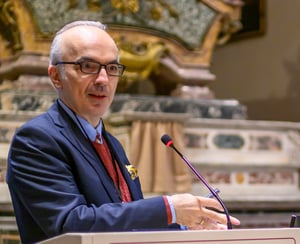
Why do some places draw us in, while others make us want to leave? As a neuroscientist, I explore how buildings, cities, and beauty affect our brains and wellbeing. My work connects neuroscience, psychology, and architecture, with a particular interest in nature and organised visual complexity. I have published extensively in peer-reviewed journals, contributed chapters to books, co-edited scholarly volumes, and delivered invited lectures internationally. Through research and visual examples, I help audiences understand our responses to everyday environments and consider how we can create places that better support human life.
Neuroscience-informed design advisory: Research-based guidance on perception, beauty, biophilia, and wellbeing in buildings and urban spaces.
Courses and training: Tailored seminars and workshops on neuroaesthetics, evaluating human responses to environments, and AI-assisted design exploration.
No organizer feedback collected yet. Reviews appear on Verified profiles, collected by Short List Speakers from organizers who booked the speaker and published regardless of sentiment. How we collect feedback